
How Often Should Businesses Clean Carpets?
Most businesses should schedule professional carpet cleaning every 3 to 12 months, depending on foot traffic, the type of business, the carpet’s condition, and environmental factors. A busy restaurant or retail store may need professional cleaning every two to three months, while a small office with light daily traffic may only require deep cleaning once or twice a year. Understanding the right business carpet cleaning frequency helps maintain a healthier workplace, extends the life of your carpets, and creates a positive impression on employees and customers.
A small accounting office in League City thought vacuuming every evening was enough to keep its carpets in good condition. At first glance, everything looked clean. However, after several months, employees noticed lingering odors, darker traffic lanes near the entrance, and an increase in dust around workstations. When the carpets were professionally cleaned, the difference was immediately noticeable. The office looked brighter, the air felt fresher, and the business realized that appearance alone doesn’t always reveal what’s trapped deep inside carpet fibers.
Many business owners make the same mistake. Carpets collect dirt, allergens, moisture, bacteria, and debris long before they begin to look dirty. Waiting until stains become obvious often means the carpet has already experienced unnecessary wear. That’s why understanding the right business carpet cleaning frequency is about more than appearance. It’s part of protecting your investment, maintaining a professional image, and creating a healthier indoor environment.
In this guide, you’ll learn how often different types of businesses should clean their carpets, the factors that influence cleaning schedules, warning signs that shouldn’t be ignored, and practical maintenance tips that can help commercial carpets last for years.
Why Business Carpet Cleaning Frequency Matters
Many business owners assume carpet cleaning is only necessary when stains become visible. In reality, by the time a carpet looks dirty, thousands of soil particles, dust, allergens, and contaminants may already be embedded deep within the fibers.
Following the right business carpet cleaning frequency offers benefits that go far beyond keeping floors attractive.
Professional cleaning helps:
- Improve the appearance of your business.
- Extend the lifespan of commercial carpets.
- Remove allergens, dust mites, and bacteria.
- Reduce unpleasant odors.
- Maintain healthier indoor air quality.
- Protect carpet warranties that require regular maintenance.
- Create a cleaner, more welcoming environment for customers and employees.
Regular maintenance is also a smart financial decision. Replacing commercial carpet is significantly more expensive than keeping it clean through scheduled professional care.

What Determines the Right Business Carpet Cleaning Frequency?
No single cleaning schedule works for every business. The ideal business carpet cleaning frequency depends on several important factors, many of which are overlooked in competing articles.
1. Daily Foot Traffic
Foot traffic is one of the biggest factors affecting commercial carpets.
Every customer, employee, or visitor brings in dirt, sand, pollen, and moisture from outside. Over time, these particles settle deep into carpet fibers and act like tiny abrasives that gradually wear them down.
Businesses with constant customer traffic generally require more frequent professional cleaning than offices with only a handful of employees.
Examples of high-traffic businesses include:
- Retail stores
- Restaurants
- Hotels
- Medical clinics
- Schools
- Event venues
- Fitness centers
Low-traffic offices can often extend the time between deep cleanings, provided routine maintenance is performed consistently.

2. Your Industry
A medical clinic has very different hygiene expectations than a law office, and a busy café experiences completely different carpet challenges than a real estate agency.
The table below provides a more realistic guideline.
| Business Type | Recommended Professional Cleaning |
|---|---|
| Office Buildings | Every 6–12 months |
| Retail Stores | Every 3–6 months |
| Restaurants and Cafés | Every 2–3 months |
| Hotels | Every 3–6 months |
| Medical and Dental Offices | Every 3–6 months |
| Schools and Universities | Every 3–6 months |
| Daycare Centers | Every 2–3 months |
| Fitness Centers | Every 3–4 months |
| Apartment Leasing Offices | Every 6 months |
Rather than relying on a fixed schedule, businesses should adjust their business carpet cleaning frequency according to their daily operations, occupancy levels, and cleanliness requirements.

3. Weather and Local Climate
Businesses located in League City, Friendswood, Pearland, Dickinson, Webster, Pasadena, and Seabrook face unique challenges because of the Gulf Coast climate.
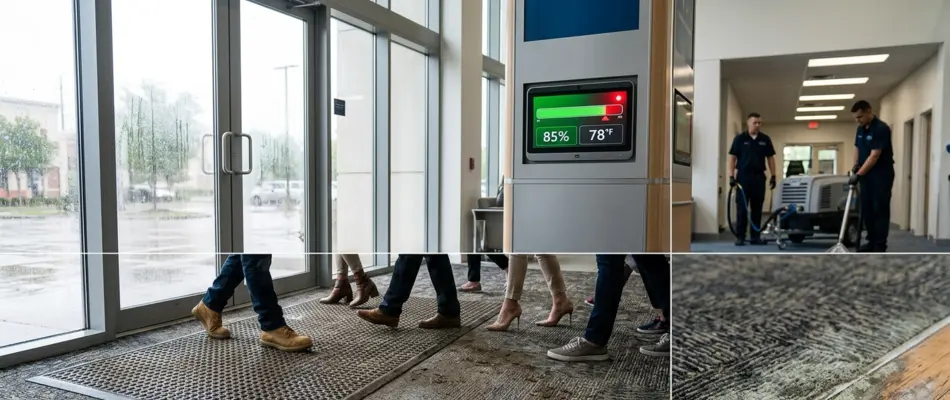
Humidity allows moisture to remain in carpets longer, while frequent rain can increase the amount of dirt tracked indoors. Over time, this combination may contribute to unpleasant odors, mold growth, and faster carpet deterioration if regular maintenance is ignored.
For commercial properties in these areas, seasonal weather should be considered when planning a business carpet cleaning frequency schedule. Businesses with entrances exposed to rain or heavy pedestrian traffic may benefit from more frequent professional cleaning than the national average.
4. Carpet Material
Not all commercial carpets respond to dirt and wear in the same way.
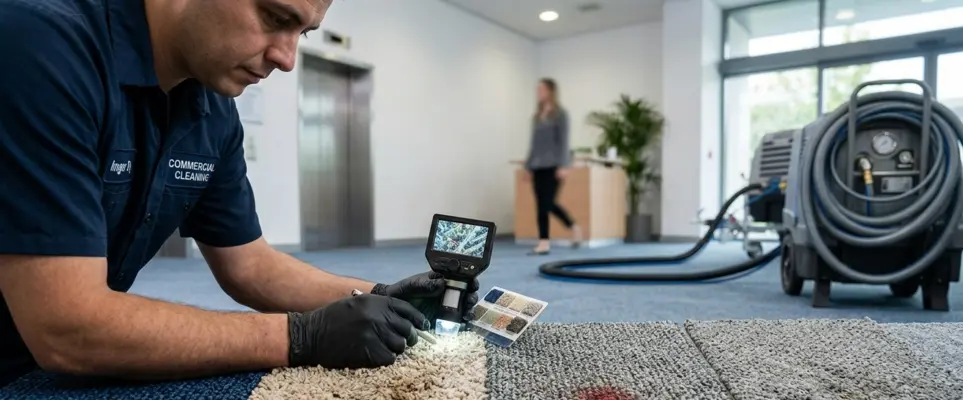
Some synthetic fibers are designed to resist staining, while others can trap fine particles more easily. Carpet color, pile height, and fiber density also influence how quickly carpets begin to show signs of wear.
Professional technicians evaluate these factors before recommending an appropriate cleaning schedule rather than applying the same maintenance plan to every property.
5. Indoor Air Quality Goals
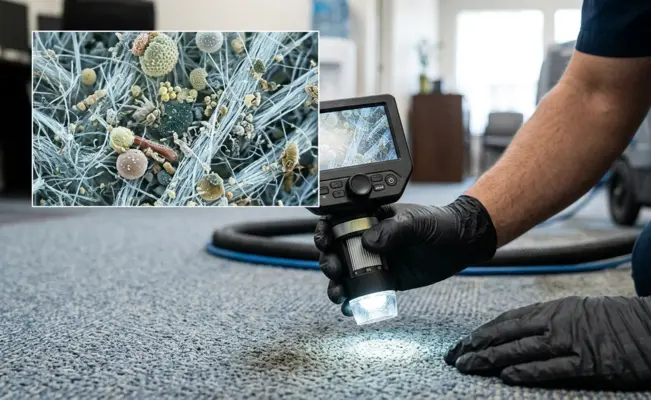
Commercial carpets act as large filters, trapping dust, pollen, pet dander brought in on clothing, bacteria, and other airborne particles.
Without regular deep cleaning, these contaminants continue to build up, especially in enclosed office environments where heating and cooling systems continuously circulate indoor air.
Businesses focused on employee wellness or customer comfort often choose a more proactive business carpet cleaning frequency to help maintain cleaner indoor air throughout the year.
How Often Should Different Businesses Clean Their Carpets?
The ideal business carpet cleaning frequency should always reflect how your space is used rather than following a one-size-fits-all schedule.
Office Buildings
Office environments usually experience moderate daily traffic. While employees may spend most of their time at desks, reception areas, hallways, meeting rooms, and break rooms receive continuous use.
For most offices, professional carpet cleaning every 6 to 12 months is sufficient. However, larger offices with hundreds of employees or frequent client visits may benefit from cleaning every 4 to 6 months.
To keep carpets looking their best between professional visits:
- Vacuum high-traffic areas daily.
- Address spills immediately.
- Rotate entrance mats regularly.
- Schedule periodic spot treatments.
Maintaining the right business carpet cleaning frequency helps office spaces project a professional image while extending the life of commercial flooring.
Retail Stores
Retail stores often deal with constant customer traffic, especially during weekends, holidays, and seasonal sales.
Every visitor brings dirt, sand, moisture, and debris inside. Even if carpets appear clean, abrasive particles gradually damage carpet fibers with every step.
Retail businesses should generally schedule professional carpet cleaning every 3 to 6 months.
Stores selling clothing, furniture, electronics, or home goods should also inspect entrance areas more frequently since these zones experience the greatest wear.
Restaurants and Cafés
Restaurants face one of the toughest carpet maintenance challenges.
Food spills, grease, beverage stains, and heavy customer traffic quickly affect carpet appearance and hygiene.
Waiting until carpets look dirty is rarely a good strategy.
Instead, restaurants should plan professional carpet cleaning every 2 to 3 months, with immediate spot cleaning whenever spills occur.
Maintaining an appropriate business carpet cleaning frequency also helps reduce lingering food odors and creates a cleaner dining environment for guests.
Hotels
Hotel carpets experience continuous use from guests, luggage, housekeeping carts, and event traffic.
Lobby carpets often require more frequent maintenance than guest rooms because they receive significantly more foot traffic.
Hotels generally benefit from:
- Guest rooms: every 6 months
- Hallways: every 3 to 4 months
- Lobbies and event spaces: every 2 to 3 months
Separating cleaning schedules by area allows hotels to maintain a consistently professional appearance without unnecessary expense.
Medical and Dental Offices
Healthcare facilities have stricter cleanliness expectations than most commercial properties.
Patients expect waiting rooms, consultation rooms, and hallways to look clean and well maintained.
Professional carpet cleaning every 3 to 6 months helps reduce accumulated dust, allergens, and contaminants while supporting a healthier indoor environment.
Many healthcare providers also increase cleaning frequency during flu season or periods of higher patient volume.
Schools and Daycare Centers
Children spend hours sitting, playing, and learning on carpeted surfaces.
Combined with heavy daily traffic, this creates ideal conditions for dirt, bacteria, and allergens to accumulate.
Schools should typically schedule professional carpet cleaning every 3 to 6 months, while daycare centers often benefit from cleaning every 2 to 3 months because of increased spills and close contact with carpeted areas.
Business Carpet Cleaning Frequency Based on Foot Traffic
Rather than relying only on calendar dates, businesses should also consider daily occupancy.
The table below provides a practical maintenance guide.
| Foot Traffic Level | Examples | Recommended Professional Cleaning |
|---|---|---|
| Low | Small offices, accounting firms | Every 9–12 months |
| Moderate | Corporate offices, banks | Every 6 months |
| High | Retail stores, schools | Every 3–4 months |
| Very High | Restaurants, hotels, medical facilities | Every 2–3 months |
Using both industry type and traffic volume creates a far more accurate business carpet cleaning frequency than following generic recommendations.
Signs Your Business Needs Carpet Cleaning Sooner
Another weakness of many competing articles is that they focus only on fixed schedules.
In reality, your carpets often tell you when they need attention.
You shouldn’t wait for the next scheduled appointment if you notice any of the following:
Visible Traffic Lanes
Dark walkways near entrances, reception desks, and hallways indicate embedded soil that routine vacuuming cannot remove.
Related: Why Vacuuming Alone Is Not Enough for Your Carpets
Lingering Odors
Persistent odors often mean contaminants have settled deep within the carpet backing.
Professional cleaning removes the source instead of temporarily masking the smell.
Stains That Keep Returning
Some stains disappear after cleaning but reappear days later because residue remains beneath the surface.
Deep extraction is often needed to solve the problem.
Increased Allergy Complaints
Dust, pollen, pet dander carried in on clothing, and other allergens can build up over time.
If employees frequently complain about sneezing or poor indoor air quality, the carpet may be contributing to the problem.
Dull Appearance
Even without obvious stains, carpets gradually lose their original color and texture as fine dirt accumulates.
Professional cleaning restores appearance while helping protect carpet fibers.
Related: Top Signs Your Carpet Needs Professional Cleaning
Routine Maintenance vs Delaying Professional Cleaning
Many business owners believe postponing carpet cleaning saves money.
In reality, delaying maintenance usually increases long-term costs.
| Routine Professional Cleaning | Delaying Carpet Cleaning |
|---|---|
| Extends carpet lifespan | Accelerates fiber wear |
| Improves first impressions | Creates an unprofessional appearance |
| Removes allergens and bacteria | Allows contaminants to build up |
| Supports healthier indoor air | Can contribute to unpleasant odors |
| Reduces expensive stain removal | Increases the risk of permanent staining |
| Protects flooring investment | May require earlier carpet replacement |
Following a consistent business carpet cleaning frequency is far more affordable than replacing commercial carpet years before its expected lifespan.
Build a Maintenance Plan Instead of Waiting for Dirty Carpets
Instead of asking, “Do the carpets look dirty?” Ask, “When is the next scheduled cleaning?”
Related: Questions to Ask Before Hiring Carpet Cleaners
A simple maintenance plan should include:
Daily
- Vacuum entrances and high-traffic areas.
- Remove spills immediately.
- Check entrance mats for excess dirt.
Weekly
- Inspect heavy-use areas.
- Spot clean visible stains.
- Rotate or clean entry mats.
Monthly
- Inspect carpet condition throughout the building.
- Identify areas showing early wear.
- Schedule touch-up cleaning if necessary.
Quarterly or Semi-Annually
- Arrange professional deep cleaning based on your business carpet cleaning frequency and the level of foot traffic in your facility.
This proactive approach helps businesses avoid unexpected cleaning emergencies and keeps commercial spaces looking professional year-round.
Expert Tip for Businesses in League City and Nearby Communities
Businesses in League City, Friendswood, Pearland, Dickinson, Webster, Pasadena, and Seabrook should pay extra attention during periods of heavy rain and high humidity.
Moisture tracked indoors can remain trapped within carpet fibers if not removed promptly. Scheduling professional cleaning before and after wetter seasons helps reduce soil buildup, improve drying conditions, and maintain a cleaner work environment.
Related:
Area Rug Cleaning
Carpet Stain Removal
Deep Carpet Cleaning
Pet Odor Removal
Steam Carpet Cleaning
Upholstery Cleaning
Frequently Asked Questions
1. What is the ideal business carpet cleaning frequency?
The ideal business carpet cleaning frequency depends on your industry, foot traffic, and the condition of your carpets. Most offices benefit from professional cleaning every 6 to 12 months, while restaurants, hotels, retail stores, and medical facilities often need cleaning every 2 to 6 months to maintain a clean and professional environment.
2. Can regular carpet cleaning help businesses save money?
Yes. Following a consistent business carpet cleaning frequency removes abrasive dirt before it damages carpet fibers. This extends the carpet’s lifespan, reduces repair costs, and delays expensive replacement, making routine maintenance a cost-effective investment.
3. Does foot traffic affect how often commercial carpets should be cleaned?
Absolutely. High-traffic areas collect dirt, moisture, and debris much faster than low-traffic spaces. Businesses with frequent customer visits generally require more professional cleaning than offices with limited daily traffic.
4. Should businesses wait until carpets look dirty?
No. By the time commercial carpets appear dirty, soil and contaminants have usually built up deep within the fibers. Professional cleaning should follow a planned maintenance schedule rather than relying only on visible stains or discoloration.
5. Which cleaning method is best for commercial carpets?
The best method depends on the carpet type, level of soiling, and business environment. Hot water extraction (steam cleaning) is often recommended for deep cleaning, while low-moisture methods may be suitable for businesses that need faster drying times.
6. How can businesses keep carpets cleaner between professional visits?
Daily vacuuming, prompt spill cleanup, entrance mats, regular inspections, and furniture protection all help maintain cleaner carpets. These practices support your business carpet cleaning frequency schedule and reduce excessive wear between professional cleanings.
Final Thoughts
Every business has different carpet maintenance needs, but one thing remains the same: waiting until carpets look dirty is rarely the best approach. A well-planned business carpet cleaning frequency helps protect your flooring investment, creates a healthier indoor environment, and leaves a positive impression on everyone who walks through your doors.
Instead of following a generic timetable, evaluate your business based on foot traffic, industry requirements, seasonal conditions, and daily operations. Offices may only require professional cleaning once or twice a year, while restaurants, hotels, schools, and healthcare facilities often need much more frequent attention.
If your business is located in League City, Friendswood, Pearland, Dickinson, Webster, Pasadena, Seabrook, or nearby communities, consider local weather conditions as part of your maintenance plan. Gulf Coast humidity, rain, and increased moisture can accelerate dirt buildup and affect drying times, making routine professional cleaning even more valuable.
By following the right business carpet cleaning frequency, you can improve your company’s appearance, support healthier indoor air quality, reduce long-term maintenance costs, and help your commercial carpets perform their best for years to come.
Contact Us
Our Services
About Us
One Response