
The science behind deep carpet cleaning involves heat, water, cleaning solutions, agitation, and powerful extraction methods that remove dirt, allergens, bacteria, and contaminants trapped deep within carpet fibers. Unlike routine vacuuming or surface cleaning, deep carpet cleaning targets the hidden layers of the carpet where microscopic particles accumulate over time. This process not only improves appearance but also helps create a healthier indoor environment, extends the carpet’s lifespan, and restores the carpet’s performance.
Most homeowners see carpet as a simple flooring material, but it is actually a complex system made up of fibers, backing, padding, and thousands of tiny spaces where dirt and contaminants can become trapped. Every day, carpets collect dust, pollen, pet dander, bacteria, food particles, and soil brought in from outside. While regular vacuuming is essential, it cannot remove everything that settles deep within the carpet structure.
Understanding the science behind deep carpet cleaning helps explain why professional cleaning methods are so effective. It also reveals why routine maintenance alone is often not enough to keep carpets truly clean. Whether you live in League City, Pearland, Webster, Kemah, or nearby communities, understanding how deep carpet cleaning works can help you make informed decisions about carpet care and maintenance.
1. Why Carpets Collect So Much Dirt
Carpets act like giant filters inside a home. Their fibers are designed to trap particles that would otherwise remain airborne and circulate throughout living spaces. Every time someone enters the home, tiny amounts of dirt, dust, pollen, and other debris are carried in on shoes, clothing, and personal belongings.
Over time, these particles settle into the carpet and become trapped between the fibers. Some remain near the surface where vacuuming can remove them, but many gradually work their way deeper into the carpet structure. Foot traffic pushes contaminants further down, making them increasingly difficult to reach with ordinary cleaning methods.
This filtering effect can be beneficial because it helps reduce airborne debris in the home. However, it also means carpets can accumulate large amounts of contamination over time. Even carpets that appear clean may contain significant amounts of dirt hidden beneath the surface.
This is one reason homeowners seeking carpet cleaning in League City often find their carpets contain far more debris than they initially expected.
2. What Happens Beneath the Surface of Your Carpet
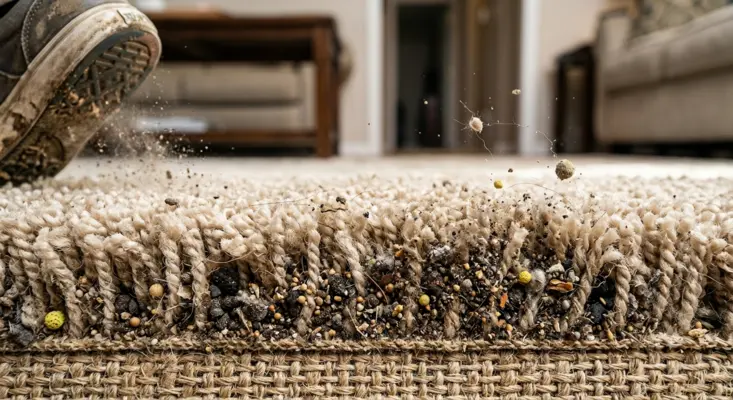
The visible surface of a carpet represents only a small portion of the overall structure. Beneath the fibers lies a complex network of spaces where microbial contaminants can accumulate.
Dust mites, bacteria, pollen, mold spores, pet dander, and soil particles often settle below the surface layer. These contaminants may remain hidden for months or even years if not properly removed. While vacuuming can capture some surface debris, it typically cannot reach the deepest layers where many contaminants collect.
As foot traffic continues, these particles become compressed deeper into the carpet. The result is a hidden reservoir of contamination that affects both carpet cleanliness and indoor air quality.
Scientific studies have shown that carpets can harbor a wide variety of microscopic organisms and allergens. This is particularly important for households with children, pets, allergy sufferers, or individuals with respiratory sensitivities.
Deep carpet cleaning targets these hidden contaminants and removes them from areas that routine cleaning cannot effectively reach.
3. Understanding Carpet Fibers and Soil Adhesion
One of the reasons carpets become dirty so easily is that soil particles naturally adhere to carpet fibers. This process is known as soil adhesion.
Carpet fibers develop static charges and surface attractions that cause dirt particles to cling tightly to them. Oils from shoes, cooking residues, pet activity, and everyday household living can further increase this attachment.
As dirt bonds to the fibers, it becomes increasingly difficult to remove through simple vacuuming. Some particles become lodged between individual fibers while others attach directly to the surface of the material.
Over time, multiple layers of contamination can develop. New dirt attaches to existing dirt, creating a buildup that becomes more resistant to ordinary cleaning efforts.
The science of deep carpet cleaning focuses on breaking these bonds so contaminants can be safely removed rather than simply shifted around within the carpet.
4. The Science Behind Deep Carpet Cleaning and Hot Water Extraction
Hot water extraction is widely recognized as one of the most effective deep carpet cleaning methods available. Although many people refer to it as steam cleaning, the process primarily relies on heated water, cleaning solutions, and powerful extraction.
During the cleaning process, hot water is injected deep into the carpet fibers under controlled pressure. This water penetrates areas that ordinary cleaning methods cannot reach. At the same time, specialized cleaning solutions help loosen dirt, oils, and contaminants attached to the fibers.
Once contaminants have been loosened, a powerful extraction system immediately removes the water along with suspended debris. This process effectively flushes contaminants from the carpet rather than simply redistributing them.
The combination of heat, cleaning agents, and extraction creates a highly effective cleaning system capable of removing deeply embedded dirt and allergens.
This is one reason why professional deep carpet cleaning consistently produces better results than many DIY methods.

5. The Role of Water Temperature in Deep Cleaning
Temperature plays an important role in the effectiveness of carpet cleaning. Heated water improves cleaning performance by helping dissolve oils, loosen contaminants, and increase the effectiveness of cleaning solutions.
Many substances that cling to carpet fibers contain oily residues. These residues become easier to break down when exposed to higher temperatures. The heat helps separate dirt from the fibers, allowing extraction equipment to remove it more efficiently.
In addition to improving soil removal, elevated temperatures can help reduce bacterial contamination and improve overall sanitation. While heat alone is not responsible for cleaning success, it significantly enhances the overall process.
Professional carpet cleaning equipment is designed to maintain appropriate water temperatures throughout the cleaning procedure. This ensures consistent performance and more thorough cleaning results.
6. How Cleaning Solutions Break Down Contaminants
Cleaning solutions play an important role in the science of deep carpet cleaning. Their purpose is not simply to make the carpet smell fresh. Instead, they are designed to break the bonds that hold dirt and contaminants in place.
Many professional cleaning products contain surfactants. These compounds reduce the surface tension between dirt particles and carpet fibers. As a result, contaminants become suspended within the cleaning solution rather than remaining attached to the carpet.
This process makes it easier for extraction equipment to remove contaminants completely from the carpet. Without proper cleaning agents, many particles would remain attached to the fibers even after extensive rinsing.
Different contaminants require different cleaning approaches. Protein-based stains, oily residues, pet-related contamination, and food spills often respond best to specialized cleaning formulations designed for specific situations.

7. Why Agitation Improves Cleaning Results
Agitation is another important scientific principle behind effective carpet cleaning. Simply applying water and cleaning solution is not always enough to remove embedded soil.
Agitation helps loosen contaminants by creating controlled movement within the carpet fibers. This action allows cleaning solutions to penetrate more effectively and reach particles trapped deep within the carpet.
Professional carpet cleaning equipment often incorporates agitation through specialized brushes, grooming tools, or mechanical systems. These tools help separate dirt from the fibers and improve overall cleaning performance.
Without proper agitation, some contaminants may remain attached even after exposure to cleaning solutions. The combination of agitation, heat, and extraction plays a major role in the science behind deep carpet cleaning process.
8. Why Powerful Extraction Matters in the Science Behind Deep Carpet Cleaning
One of the most important stages of deep carpet cleaning is extraction. After contaminants have been loosened and suspended, they must be removed from the carpet.
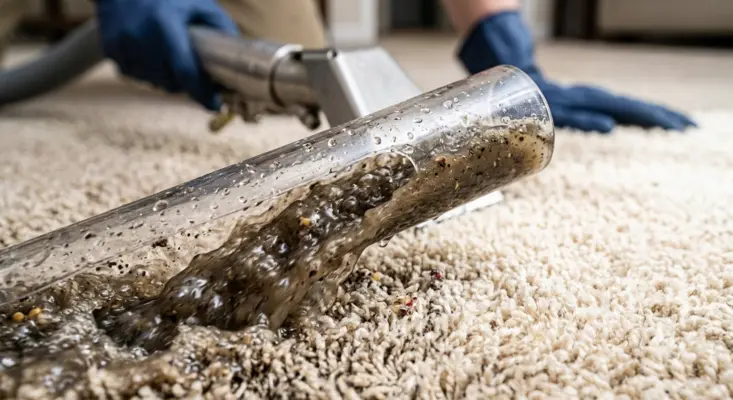
Powerful extraction equipment creates strong suction that pulls water, dirt, allergens, bacteria, and cleaning solution residue from the carpet fibers. This step is critical because contaminants that remain behind can continue affecting appearance and indoor air quality.
Professional extraction systems are significantly more powerful than most consumer-grade carpet cleaning machines. Their ability to remove moisture and debris directly improves cleaning results.
Effective extraction also reduces drying times, which helps minimize the risk of moisture-related issues such as mold growth and unpleasant odors.
9. The Science of Faster Drying
Drying is an essential part of the carpet cleaning process. A properly cleaned carpet should not remain wet for an extended period.
When moisture lingers within carpet fibers or padding, it creates conditions that may support mold, mildew, and bacterial growth. This is particularly important in coastal areas such as League City, Pearland, and Seabrook, where humidity levels can already be elevated.
Professional carpet cleaning equipment removes a substantial amount of water during extraction. Improved airflow and proper cleaning techniques further accelerate the drying process.
The goal is to remove contaminants while leaving behind as little residual moisture as possible. Faster drying contributes to both carpet health and indoor environmental quality.
10. The Science Behind Deep Carpet Cleaning and Indoor Air Quality
Indoor air quality is closely connected to carpet cleanliness. Because carpets trap airborne particles, they can affect the air quality people breathe in their homes.
Dust mites, pet dander, pollen, mold spores, and microscopic debris often accumulate within carpet fibers over time. As people walk across the carpet, some of these particles can become airborne again.
Deep carpet cleaning removes many of these contaminants before they have an opportunity to recirculate throughout the home. This can contribute to a cleaner indoor environment and may help reduce exposure to common allergens.
For families living in League City, Friendswood, Webster, and surrounding areas, maintaining cleaner carpets can play an important role in supporting overall indoor comfort.
11. Why Deep Cleaning Extends Carpet Life
Beyond improving appearance, deep carpet cleaning helps preserve the carpet’s structural integrity.
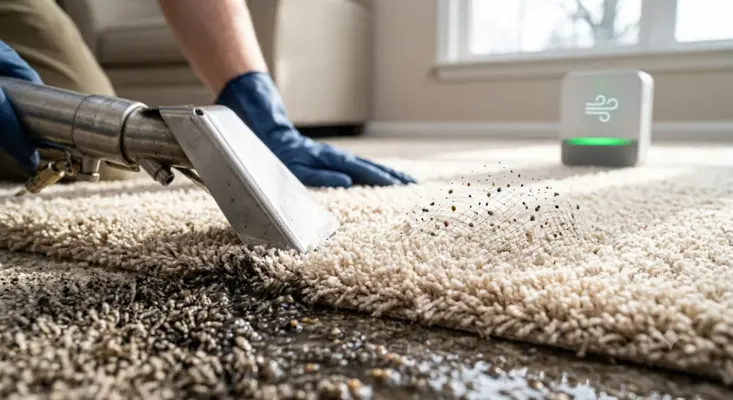
Dirt particles trapped within carpet fibers act like tiny abrasive materials. Every step across the carpet causes these particles to rub against the fibers, gradually wearing them down. Over time, this leads to flattening, discoloration, and premature aging.
Removing these abrasive particles reduces stress on the fibers and helps maintain their appearance and resilience. Professional deep cleaning, therefore, serves both a cosmetic and protective function.
This is another reason why the science behind deep carpet cleaning focuses on removing abrasive particles before they damage carpet fibers.
Frequently Asked Questions
What is deep carpet cleaning?
Deep carpet cleaning is a process that removes dirt, allergens, bacteria, and contaminants from beneath the surface of the carpet using specialized equipment, cleaning solutions, and extraction methods.
Is deep carpet cleaning the same as steam cleaning?
Many people use the terms interchangeably. Most professional services rely on hot-water extraction, which uses heated water and powerful suction to thoroughly clean carpets.
Why does deep carpet cleaning work better than vacuuming?
Vacuuming primarily removes surface debris, while deep carpet cleaning targets contaminants trapped deep within the fibers, backing, and lower layers of the carpet.
Does deep carpet cleaning remove allergens?
Yes. Deep carpet cleaning can remove dust mites, pollen, pet dander, and other allergens that accumulate within carpet fibers over time.
How often should carpets be deep cleaned?
Most carpets benefit from professional deep cleaning every twelve to eighteen months. Homes with pets, children, or heavy foot traffic may require more frequent service.
What is the science behind deep carpet cleaning?
The science behind deep carpet cleaning involves heat, chemistry, agitation, and extraction working together to remove contaminants from deep within carpet fibers.
Final Thoughts
The science behind deep carpet cleaning is based on proven principles involving heat, chemistry, agitation, extraction, and moisture control. Together, these elements work to remove contaminants that ordinary cleaning methods often leave behind. By targeting dirt, allergens, bacteria, and debris deep within the carpet structure, professional cleaning provides benefits that go far beyond surface appearance.
For homeowners interested in maintaining cleaner carpets, healthier indoor environments, and longer-lasting flooring, understanding the science behind deep carpet cleaning can help explain why professional carpet cleaning in League City remains an essential part of proper carpet care.
Related Blogs:
Why Vacuuming Alone Is Not Enough for Your Carpets
Top Signs Your Carpet Needs Professional Cleaning
Questions to Ask Before Hiring Carpet Cleaners
2 Responses