
If you deal with sneezing, itchy eyes, a stuffy nose, or allergy symptoms at home, you may have wondered whether your carpet is making things worse. The connection between carpet cleaning and allergies is real, but it is more complicated than simply saying that dirty carpet causes allergies. Carpet can collect dust, pollen, pet dander, and other particles over time. Regular vacuuming and appropriate professional cleaning can help remove some of that buildup and reduce exposure to indoor allergens.
A League City homeowner might notice this after spending more time indoors. The carpet may look reasonably clean, yet the family still notices dust collecting around the house or pet hair building up in rooms where the family spends the most time. A closer look at the carpet can reveal why appearance does not always tell the whole story.
That does not mean the carpet is necessarily the source of the problem. Allergies have many possible triggers, and cleaning carpet cannot cure an allergy. However, keeping carpets and other soft surfaces clean can be one useful part of an overall strategy for reducing indoor allergen exposure.
1. Can Carpet Cleaning Help With Allergies?
Yes, carpet cleaning and allergies can be connected because carpets can collect particles that may trigger or aggravate symptoms in sensitive people.
Carpet fibers can hold dust, pollen, pet dander, soil, and other small particles. Normal foot traffic can disturb some of these particles and put them back into the surrounding environment. Vacuuming helps remove loose material, while deeper professional cleaning can address soil and particles that have accumulated farther down in the carpet.
If someone in your household has a known allergy, it is better to think about carpet cleaning as one part of a larger indoor cleaning routine. Bedding, upholstery, curtains, hard floors, air filters, and humidity levels can also matter.
The Environmental Protection Agency recommends controlling indoor sources of biological pollutants and maintaining appropriate cleaning practices. Dust mites, pollen, and animal dander are among the biological pollutants that can affect indoor air quality.
So when considering carpet cleaning and allergies, the practical question is not “Will cleaning cure allergies?” The better question is
Can removing accumulated allergens and dust from carpet reduce one possible source of indoor exposure?
In many homes, the answer can be yes.
2. Why Can Carpet Collect Allergy Triggers?
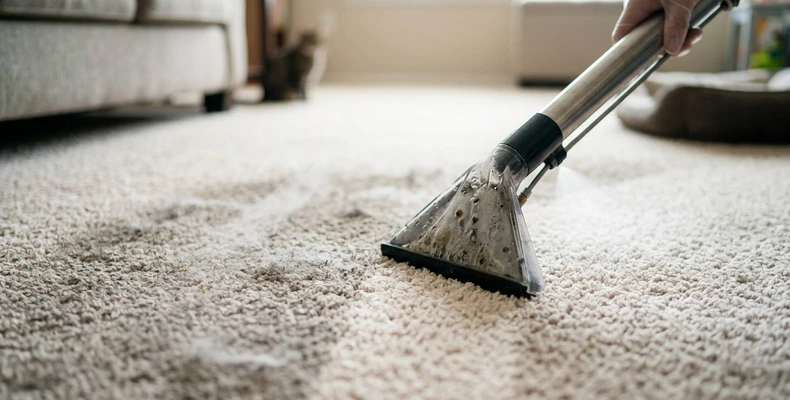
Carpet is made from thousands of individual fibers, creating a large surface area where small particles can become trapped.
That is not automatically a bad thing. In fact, carpet can temporarily capture particles that might otherwise remain airborne. The problem develops when those particles accumulate and are not removed effectively.
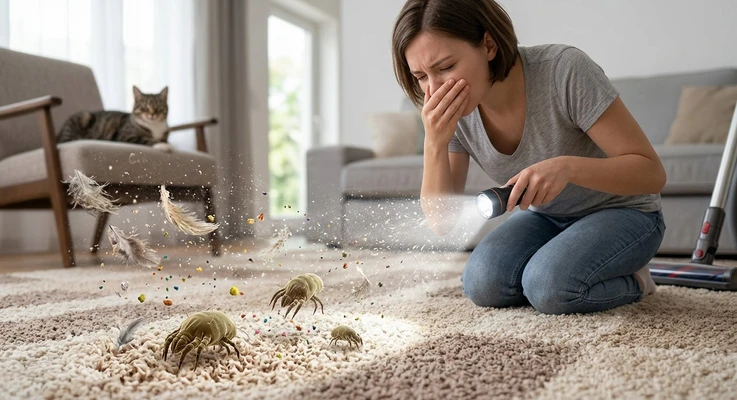
Several common indoor allergens can become associated with carpet.
Dust and Fine Particles
Every home contains dust. It can include skin flakes, soil particles, fabric fibers, and other microscopic material.
Regular vacuuming removes a significant amount of loose dust, but areas with heavy traffic can gradually develop deeper soil.
Related:
Pet Dander
Homes with dogs or cats can have another challenge. Pet dander consists of tiny particles from an animal’s skin and other biological material. It can settle into carpet, upholstery, bedding, and other soft surfaces.
Simply removing visible pet hair does not necessarily remove all of the particles associated with pets.
This is one reason carpet cleaning and allergies become particularly relevant in homes with indoor pets.
Pollen
Pollen can enter a home through open doors, windows, shoes, clothing, and pets. Once indoors, some of it can settle onto floors and soft furnishings.
A carpet near an entrance may receive a particularly heavy load of outdoor particles.
Dust Mite Allergens
Dust mites are another important consideration.
Dust mites thrive in environments where temperature, food sources, and moisture conditions are favorable. Their waste particles and body fragments can contain allergens that affect sensitive individuals.
This is why humidity control is important alongside cleaning.
3. Carpet Cleaning and Allergies: What Actually Happens?
A professional carpet cleaning process generally involves more than making the carpet look brighter.
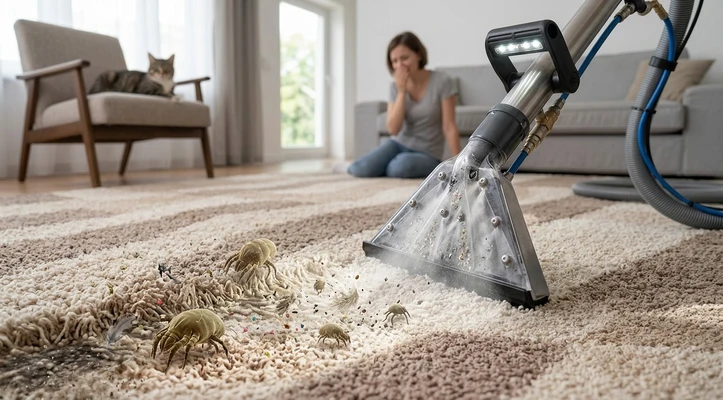
Depending on the equipment and method used, cleaning can loosen accumulated soil and suspended particles and then extract them from the carpet.
With hot water extraction, for example, cleaning solution and water are applied to the carpet and then recovered using powerful extraction equipment. The objective is to remove soil and moisture rather than simply move contaminants around.
That distinction matters.
A carpet can look clean after a surface treatment while still containing material deeper within the pile or backing.
However, it is also important not to overstate what cleaning can accomplish. No carpet cleaning process should be presented as a guaranteed way to remove every allergen from a home.
The results depend on factors such as
- Carpet construction
- Amount and type of contamination
- Cleaning method
- Equipment
- Soil depth
- Previous cleaning
- Moisture conditions
- Drying time
- Condition of the carpet and padding
Good carpet cleaning and allergy practices therefore involve both proper cleaning and ongoing maintenance.
4. Does Professional Carpet Cleaning Remove Allergens?
Professional cleaning can remove accumulated dirt and particles from carpet, which may help reduce exposure to some indoor allergens.
Research has also examined the effect of different carpet-cleaning methods on dust mites and dust-mite allergens. One important lesson from this research is that reducing live dust mites and reducing allergenic material are not necessarily the same thing.
That is an important distinction that is often missing from carpet-cleaning advertisements.
For allergy-conscious households, the goal should not be to chase a single percentage or promise. Instead, focus on reducing the overall accumulation of potential triggers.
Professional cleaning can be particularly useful when carpet has:
- Heavy foot traffic
- Visible soil
- Persistent odors
- Pet-related contamination
- Deeply embedded dirt
- Long periods between professional cleanings
For carpet cleaning and allergies, professional cleaning works best when it is combined with regular vacuuming and good household maintenance.
5. Steam Cleaning vs. Vacuuming for Allergies
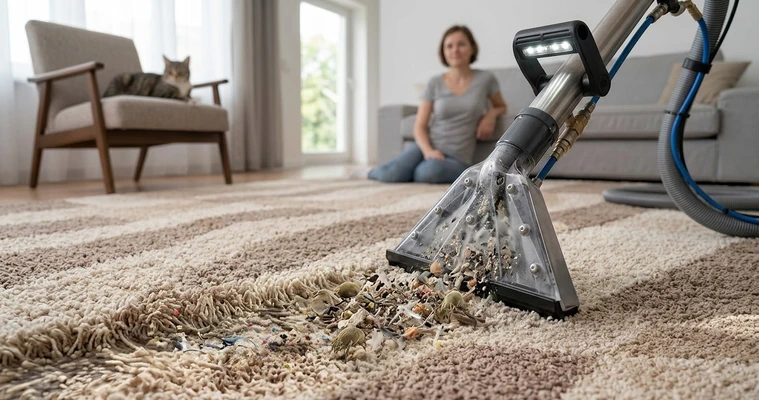
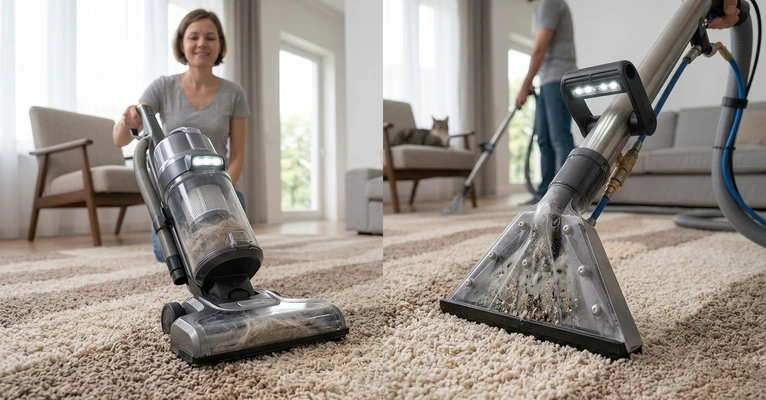
Vacuuming and professional carpet cleaning are not competing solutions. They perform different jobs.
| Cleaning method | Best use | Main limitation |
|---|---|---|
| Regular vacuuming | Removing loose dust, debris, hair, and surface soil | Does not replace deep cleaning |
| HEPA-filtered vacuuming | Capturing fine airborne particles during vacuuming | Still cannot remove every contaminant |
| Professional hot water extraction | Removing deeper soil and suspended material | Requires proper equipment and drying |
| Steam or vapor treatment | Heat-based treatment for appropriate applications | Results vary by carpet and contamination. |
| Spot cleaning | Addressing fresh spills and localized contamination | Does not clean the entire carpet |
For everyday maintenance, vacuuming is essential.
For accumulated soil, professional cleaning can provide a deeper level of cleaning than routine vacuuming.
That is why a sensible approach to carpet cleaning and allergies combines both rather than relying entirely on either one.
6. Is Vacuuming Enough if Someone Has Allergies?
Vacuuming is one of the most useful things you can do between professional cleanings, but it is not the only step.
Use a vacuum that has effective filtration, and maintain it according to the manufacturer’s instructions. A HEPA-filtered vacuum can be useful because HEPA filtration is designed to capture very small particles.
Vacuum slowly enough to give the machine time to collect material. Pay extra attention to:
- Entryways
- Hallways
- Living rooms
- Areas under furniture
- Around pet resting areas
- High-traffic paths
- Edges and corners
It is also worth remembering that allergens do not live exclusively in carpet.
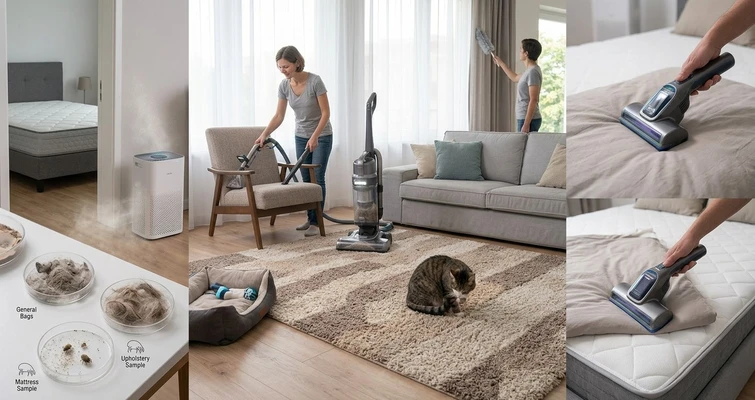
Upholstered furniture, bedding, curtains, mattresses, and rugs can also collect particles.
That means improving carpet cleaning and allergy outcomes requires looking at the entire indoor environment rather than blaming one floor covering.
7. What About Dust Mites in Carpet?
Dust mites are microscopic organisms that feed primarily on organic material found in household dust. Their allergens are an important trigger for people who are sensitive to them.
Moisture plays a major role in dust-mite survival, which is why controlling indoor humidity can be just as important as cleaning.
This matters in humid regions such as the Texas Gulf Coast.
A homeowner in League City, Dickinson, Friendswood, or nearby communities should think about moisture control as part of general indoor maintenance. Cleaning carpet without addressing an ongoing moisture problem may provide only temporary improvement.
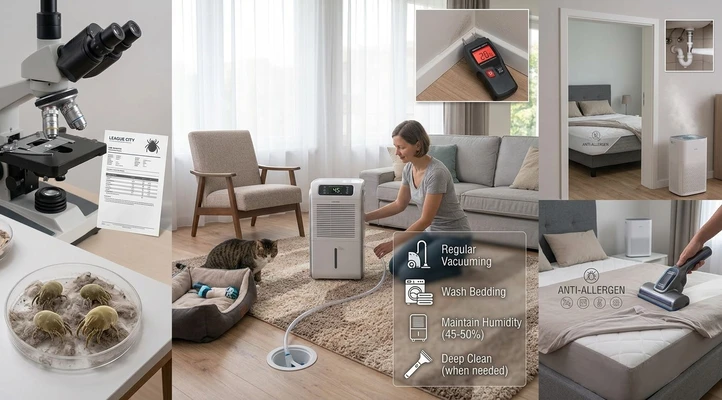
For a dust-mite-conscious cleaning routine:
- Vacuum carpets regularly.
- Wash bedding according to appropriate care instructions.
- Keep indoor humidity under control.
- Clean upholstery and rugs as needed.
- Address water leaks quickly.
- Have heavily soiled carpets professionally cleaned when appropriate.
- Investigate persistent moisture or musty odors instead of repeatedly masking them.
The connection between carpet cleaning and allergies becomes much clearer when cleaning is treated as one piece of a broader moisture and allergen-control strategy.
8. Can Dirty Carpet Make Allergies Worse?
It can contribute to greater exposure to indoor particles, but we should be careful with the wording.
Dirty carpet does not automatically cause allergies. A person must be sensitive to a particular allergen or trigger for an allergic reaction to occur.
However, if carpet accumulates dust, pet dander, pollen, or other particles that a person is sensitive to, reducing that buildup may help reduce one possible source of exposure.
This is why regular maintenance matters.
Think of carpet as a collection point. The longer particles remain there, the more opportunity there is for them to accumulate.
Foot traffic, children playing on the floor, pets moving through the room, and normal household activity can disturb settled particles.
Professional carpet cleaning and allergy maintenance can help address accumulated soil, while routine vacuuming helps keep that buildup from becoming excessive between cleanings.
9. Should You Remove Carpet if You Have Allergies?
Not necessarily.
Replacing carpet with hard flooring may reduce the amount of material available to trap dust and other particles, but that does not automatically mean the entire allergy problem will disappear.
Hard floors also collect dust. If they are not cleaned regularly, particles can remain on the surface and become airborne when disturbed.
The better choice depends on the condition of the carpet, the type of allergy triggers involved, moisture history, household preferences, and how well the floor can be maintained.
Consider cleaning first when:
- The carpet is structurally sound.
- There is no ongoing moisture problem.
- The carpet has mainly accumulated normal household soil.
- The padding is in good condition.
- There is no evidence of serious water damage.
- Regular maintenance has been inconsistent.
Consider replacement when:
- Carpet or padding has significant water damage.
- There is persistent moisture.
- There is suspected microbial growth that cannot be appropriately addressed.
- The backing or padding is deteriorating.
- The carpet cannot be adequately cleaned.
- Repeated cleaning does not resolve a serious underlying problem.
The key lesson is simple: carpet cleaning and allergies. Do not automatically mean “keep every carpet” or “remove every carpet.” The condition of the flooring and the underlying moisture situation matter.
10. Why Humidity Matters in League City Homes
Humidity deserves special attention when discussing carpet cleaning and allergies in the League City area.
League City and surrounding Gulf Coast communities experience a humid climate, and indoor moisture can affect household comfort and the conditions that support dust mites and mold.
That does not mean every humid home has a mold or allergy problem. It means moisture should be taken seriously.
If a carpet repeatedly feels damp, develops a musty smell, or has experienced water intrusion, cleaning alone may not solve the underlying problem.
The source of moisture needs to be identified.
For example, a carpet that was professionally cleaned but remains damp for an unusually long period may need better ventilation, moisture assessment, or investigation of another source.
This is also why professional carpet cleaners should not promise that cleaning alone will solve an indoor-air-quality problem.
11. How to Keep Carpet Clean Between Professional Cleanings
The best results from carpet cleaning and allergies come from consistent maintenance rather than occasional emergency cleaning.
Vacuum regularly.
Vacuuming removes loose dust, dirt, hair, and other particles before they become more deeply embedded.
High-traffic areas usually need more attention than rooms that are rarely used.
Clean spills quickly.
Fresh spills are easier to address than stains and contamination that have been allowed to sit for days.
Always follow the carpet manufacturer’s care recommendations.
Keep outdoor dirt outside.
Use entry mats and remove outdoor footwear where practical. This can reduce the amount of soil and outdoor particles brought onto the carpet.
Keep pets groomed.
Regular pet care can help reduce the amount of hair and dander accumulating around the home.
Clean upholstery
Sofas and chairs can collect many of the same particles found in carpet. If carpet is cleaned but heavily used upholstery is ignored, the overall cleaning routine remains incomplete.
Control indoor moisture.
Use appropriate ventilation and air-conditioning or dehumidification when needed. Fix plumbing leaks and address water intrusion promptly.
Schedule professional cleaning when needed.
There is no single professional-cleaning schedule that works perfectly for every household.
A home with several pets, children, heavy traffic, or allergy concerns may need more frequent attention than a lightly used home.
12. DIY vs. Professional Carpet Cleaning
DIY maintenance has an important role, but it has limits.
| DIY maintenance | Professional cleaning |
|---|---|
| Regular vacuuming | Deeper whole-carpet cleaning |
| Fresh spot treatment | Professional stain treatment |
| Entry mats | Commercial-grade extraction equipment |
| Routine dust removal | Removal of accumulated soil |
| Low ongoing cost | Higher cost per cleaning |
| Best for frequent maintenance | Best for periodic deep cleaning |
A common mistake is waiting until carpet looks extremely dirty before doing anything.
Carpet can accumulate soil before discoloration becomes obvious.
For households concerned about carpet cleaning and allergies, a better approach is preventive maintenance: vacuum regularly and arrange professional cleaning based on traffic, household conditions, pets, and the carpet manufacturer’s recommendations.
13. When Carpet Cleaning Is Not Enough
There are situations where another cleaning appointment is not the right first step.
Be cautious when you notice:
- Repeated water damage
- Persistent dampness
- Strong musty odors
- Suspected mold growth
- Wet padding
- Severe contamination
- Carpet that repeatedly develops problems after cleaning
In these situations, the underlying moisture or contamination issue needs to be investigated.
The EPA notes that moisture control is an important part of managing biological pollutants indoors. Water-damaged materials can sometimes require removal rather than simply another cleaning.
This is particularly important for carpet cleaning and allergies because repeatedly cleaning a moisture-damaged carpet without fixing the source of the moisture does not address the underlying problem.
Related: How to Choose a Carpet Cleaning Company: Proven Tips
14. What Professional Carpet Cleaning Can and Cannot Do
It helps to set realistic expectations.
Professional cleaning can help:
- Remove accumulated soil.
- Extract embedded debris.
- Reduce buildup of some indoor particles.
- Improve the cleanliness of carpet fibers.
- Address certain stains and odors.
- Support a regular indoor cleaning routine.
Professional cleaning cannot guarantee:
- That all allergens will be removed.
- That allergy symptoms will disappear.
- That a person will no longer react to pets.
- That mold problems caused by ongoing moisture will be solved.
- That every indoor-air-quality problem will be fixed.
This balanced approach is important because the goal of carpet cleaning and allergies should be realistic allergen management rather than exaggerated promises.
Related: Our Core Services
16. Carpet Cleaning and Allergies in League City, TX
For homeowners in League City and nearby communities such as Dickinson, Friendswood, Pearland, Webster, Pasadena, and Seabrook, carpet maintenance can be especially important because of the local climate and the amount of moisture that can enter homes.
That does not mean every home needs the same cleaning schedule.
A family with pets and heavy carpet traffic has different needs from a household with little foot traffic. Likewise, a home with a history of water intrusion needs a different approach from one with normal household soil.
A professional carpet cleaner should inspect the carpet before recommending a cleaning method.
That inspection can help identify:
- Carpet fiber type
- Traffic patterns
- Staining
- Soil level
- Pet-related contamination
- Moisture concerns
- Areas requiring special treatment
For homeowners considering carpet cleaning and allergies, this inspection-first approach is more useful than simply choosing the cheapest cleaning option.
Frequently Asked Questions
Does carpet cleaning help with allergies?
It can help reduce accumulated dust, soil, pet dander, pollen, and other particles in carpet. However, carpet cleaning is not a treatment or cure for allergies. Its role is to reduce potential indoor exposure as part of a broader cleaning routine.
Is steam cleaning good for people with allergies?
Professional steam or hot-water extraction can help remove accumulated soil and particles from carpet when performed correctly. The exact result depends on the carpet, contamination, equipment, and cleaning process. It should not be promoted as a guaranteed allergy treatment.
Does carpet hold dust mites?
Carpet can provide an environment where dust mites and their allergens may accumulate, particularly when moisture conditions are favorable. Humidity control, regular cleaning, and appropriate household maintenance are important parts of dust-mite management.
Is vacuuming enough to remove allergens from carpet?
Vacuuming is an important part of regular maintenance, especially when performed consistently with effective filtration. However, vacuuming does not replace periodic deep cleaning when carpet has significant accumulated soil.
Should I replace carpet if I have allergies?
Not automatically. If the carpet is in good condition and there is no ongoing moisture problem, cleaning and regular maintenance may be reasonable. Replacement may be appropriate when carpet or padding has serious water damage, persistent moisture, deterioration, or contamination that cannot be adequately addressed.
How often should carpet be cleaned if someone has allergies?
There is no single schedule that works for every household. Pets, traffic, children, outdoor activity, carpet type, and household conditions all influence how frequently professional cleaning may be useful.
Can carpet cleaning cure allergies?
No. Carpet cleaning cannot cure an allergy. It can help reduce accumulated particles that may contribute to indoor allergen exposure, but persistent allergy symptoms should be discussed with a qualified healthcare professional.
Final Thoughts on Carpet Cleaning and Allergies
The relationship between carpet cleaning and allergies is worth understanding without falling for extreme claims.
Carpet can collect dust, pollen, pet dander, and other particles. Regular vacuuming helps control everyday buildup, while professional cleaning can remove accumulated soil and particles that routine maintenance may not fully address.
At the same time, carpet is only one part of the indoor environment. Upholstery, bedding, rugs, humidity, pets, ventilation, and other factors can influence indoor allergen exposure.
For homeowners in League City and surrounding Gulf Coast communities, moisture deserves particular attention. If carpet has been exposed to water or stays damp, fixing the moisture problem should come before simply scheduling repeated cleanings.
The most practical approach is simple: vacuum consistently, clean spills promptly, control indoor moisture, maintain other soft surfaces, and use professional carpet cleaning when accumulated soil or household conditions call for it.
Clean carpet cannot guarantee freedom from allergies, but responsible carpet care can help create a cleaner indoor environment and reduce one potential source of allergen buildup.
Related Blogs:
How Much Does Carpet Cleaning Cost? A 2026 Price Guide
10 Smart Business Carpet Cleaning Frequency Tips to Save Money
Eco-Friendly Carpet Cleaning Methods: A Complete Guide to Cleaner and Healthier Carpets